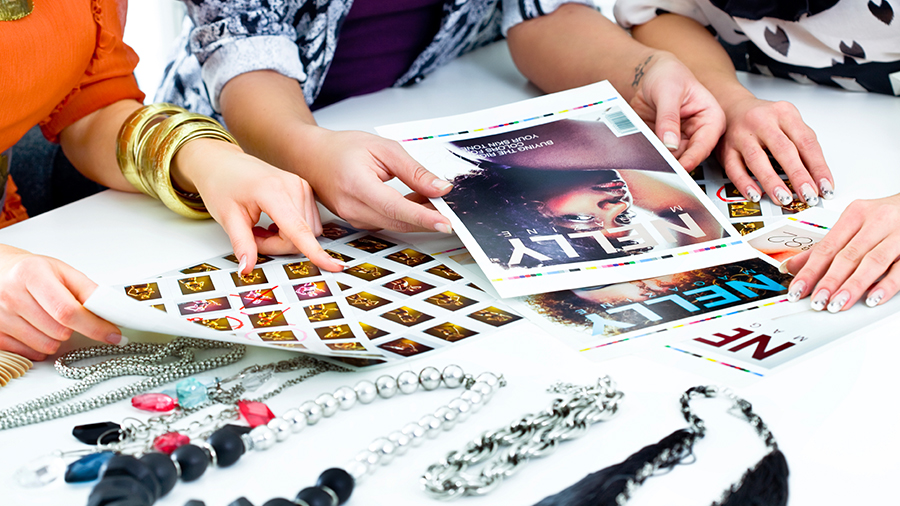
So, you too love fashion and shopping? As a shopper, we most likely do not realize the influence the merchandising strategy has on our buying decisions. Everything we see inside the shops: from the visual displays, colourful signage’s to mannequins and every single product on the store shop floors, are carefully planned by the store merchandisers for the excellent customer experience. And of course, this wonderful experience will not be possible without the right merchandise purchased by the intelligent buyer who is also artfully organised the product selection and range plan. Fashion buyers and merchandisers are playing a vital role in the fashion organisation’s development and commercial success (Nobbs, O’Sullivan and Middleton, 2014). However, the buyers and merchandisers roles were questioned on various aspects of their job, including how it might have changed in the last century, what they key role responsibilities are and what their relationships is like with their respective buyer/merchandiser. Nobbs et al. (2014), highlights that both the buyers and merchandisers are interdependent from each other, as the merchandiser provides the numerical justification and the buyer provides the style and trend justification. According to Clark (2014), the relationships between the buyer and merchandiser is often linked to marriage in which the two players work together to create the range. Furthermore, Shaw and Koumbis (2017, pp. 94-125) emphasize that both roles hold similar levels of management authority and are aiming to ensure that the team achieves specifics KPI’s that are focused on well-defined organisational financial objectives. Furthermore, both buyers and merchandisers have to adapt to changes in the fashion marketing environment which include difficult economic factors, the speed of fast fashion, the growth of e-commerce and unpredictable customer behaviour (Nobbs et al., 2014). In other words, fashion buyers and merchandisers know that if they fail to attract immediately and to provide the exact product by size and colour, most customers will simply walk away to their competitors or will try to find what they want on the Internet. For this reason, effective communication, collaboration and balance of powers are essential for the successful partnership towards goal achievements, the creation of strategic differentiation, cost reduction and unique and balanced fashion ranges that are relevant to the values held by its target customer and business model.
References:
Clark, J., 2014. Fashion merchandising: Principles and Practices [eBook]. New York: Palgrave Macmillan . Available via: NTU Library OneSearch [Accessed on 17 January 2019].
Nobbs, K., O’Sullivan, J. and Middleton, H., 2014. Exploring UK fashion buyers’ and merchandisers’ job roles. Global Fahion 2014: International Fashion Conference
[onine]
, pp.1-26. Available at: http://gfc-conference.eu/files_download/GFC2014/NOBBS_ET_AL_Exploring_UK_fashion_buyers_and_merchandisers_job_roles.pdf [Accessed on 17 January 2019].
Shaw, D. and Koumbis, D., 2017. Fashion Buying [eBook]. 2nd ed. London: Bloosbury. Available via: Bloomsbury.
 FASHION