H&M is a part of the H&M group that includes brands such as H&M Home, COS, Monki, Cheap Weekday, &Other Stories, ARKET and Afound (H&M, 2019). Together brands offer customers an abundance of styles and trends in fashion, beauty, accessorize, homewares and experiences that include healthy, modern food. Each brand has its own unique identity and works toward continues improvement on their ranges by utilising new technology, advanced analytics and AI to new ways of working right away from product development and buying to meeting with customers, while sharing common values of the H&M Group (H&M, 2017).

H&M business philosophy is to offer sustainable fashion and quality at the best price (H&M, 2017). With a wealth of product ranges, H&M provides an opportunity for anyone who is into fashion to express their individual style. H&M intends to be always up-to-date, new and meaningful. The technology and meetings with their customers help for a brand to better understand its customer needs, at the same time building trust and increasing transparency. As one of the world’s leading fast fashion companies H&M tempts to attract great interest and continuously in the spotlight. To safeguard and manage the brand, H&M is committed to follow the H&M Group social policies, such as “Global Policy on Diversity”, “Inclusiveness and Equality” and the “Global Policy on Non-Discrimination and Non-Harassment”, which are build on respect of human rights based on United Nations (UN) and International Labour Organization (ILO) convections (H&M, 2017, 37). Within the H&M there is exist above all “The Code of Ethics” and “The H&M Way” (57), which briefly describes the way in which employees should act in relations to each other and outside the business.
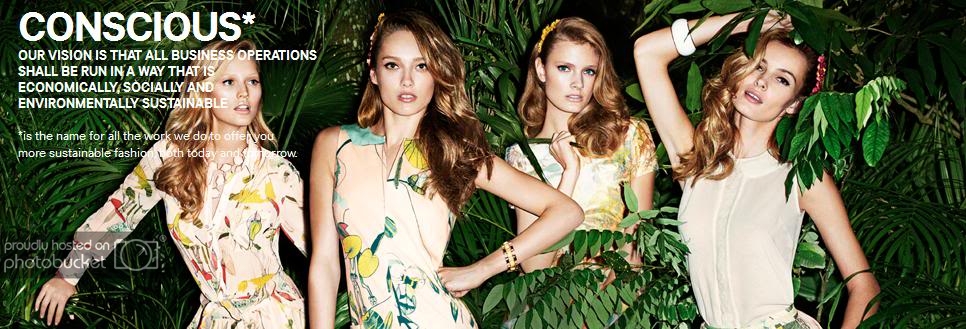
Despite inclusive and equal workplace policies as the UN member, H&M is also committed to contributing to the UN’s Agenda 2030 Sustainable Development Goals. The 17 goals include ending poverty and hunger, creating fair work and economic growth, achieving equality and preventing climate change. In addition above mentioned, H&M vision is to lead the change towards a sustainable fashion industry on a fully circular supply chain approach using only reviewable energy. By 2020 the brand aims to source 100% sustainable cotton, by 2030 use 100% recycled or sustainably sourced materials in their collections as well as cutting 25% in electricity use in the stores – per square meter and opening hours (H&M, 2017). Moreover, the brand aims to be climate-positive across the entire value chain by 2040 (H&M, 2019).
Indeed the fast fashion industry diminishes environmental well-being through waste and pollution, however, this can be improved by reducing carbon emissions and improving bio/eco-friendly practices. Thus, sustainability starts with a company’s commitment to the issues. H&M has proved its commitment by becoming a member of the UN and its 17 Sustainability Development Goals. The brand is working hard towards a more sustainable fashion future building better practices in their supply chain, mitigating risk and creating value for its customers. The bottom line is that these achievements and goals positively impact the relationship that the company has with its customers, investors and workforce, contributing to its long-term financial success.
References:
H&M, 2017. Annual report 2017. H&M.com. Available via: H&M [Accessed on 29 January 2019].
H&M, 2019. Corporate governance. H&M.com. Available via: H&M [Accessed on 29 January 2019].
H&M, 2019. H&M GROUP AT A GLANCE. H&M.com. Available via: H&M [Accessed on 29 January 2019].
H&M, 2019. Sustainability strategy. H&M.com. Available via: H&M [Accessed on 29 January 2019].
 FASHION