Fashion surrounds us everywhere. It is a form of communication widely accepted by many people from different groups of society. It affects the way we eat, dress, decorate our homes, spend our leisure, and speak (Donnellan, 2014). According to Stone and Farnan (2017), the general interest in fashion has increased in recent years making fashion an internal part of our economic system Meanwhile, trend implies the movement of a fashion. According to the theory of the Leisure Class (Lowe, 2010), fashion emerges through innovation within the upper classes, who continually create new forms of dress that are more sophisticated and expensive in order to reaffirm the place they occupy within their own social space. Then, fashion spreads through imitation as the lower classes start imitating the upper classes’ behaviour. While the Trickle-up theory (Kawamura, 2012) states the opposite. According to this theory, new styles emerge in the lower-status groups and are then adopted by higher status groups Subcultures leadership theory (Sproles, 1994), also, describes fashion trend movement in the upward direction from subcultures to the mainstream. For example, the street style adopted today by many and which also influences many designer collections, especially junior, contemporary and denim has been found by subcultures.
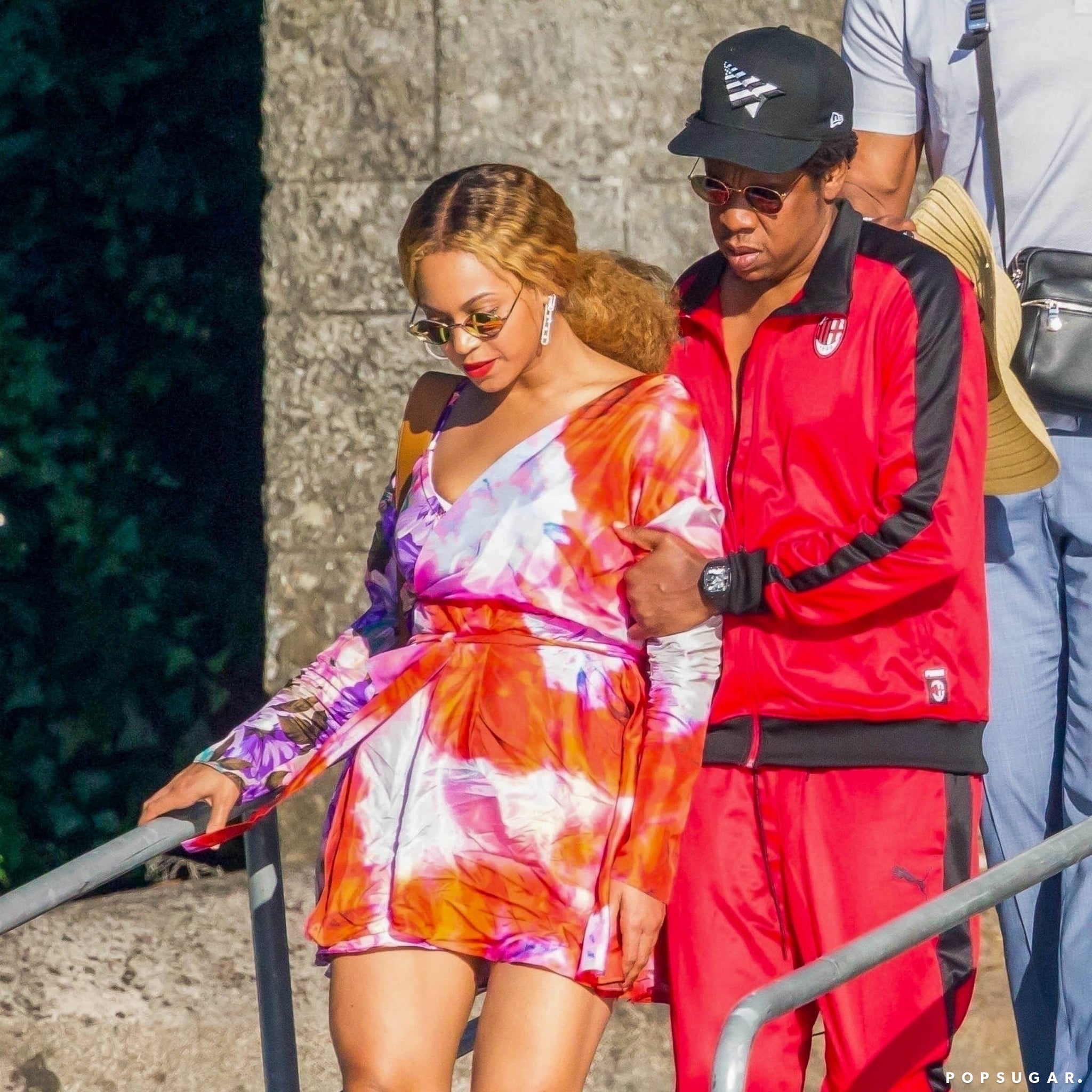
Many street styles can become popular in the matter of the days, thanks for social media. For example, tie-dye trend has been considered as dead until Beyoncé wore it on 2018 holiday on the beach last year, other celebrities like Dree Hemingway and Justin Bieber have been wearing the print too
Following the trend, several brands and catwalk designers have incorporated this style as part of their collections. These include Prada, Proenza, Stella McCartney, and R13 (Unico Media Group, 2019).
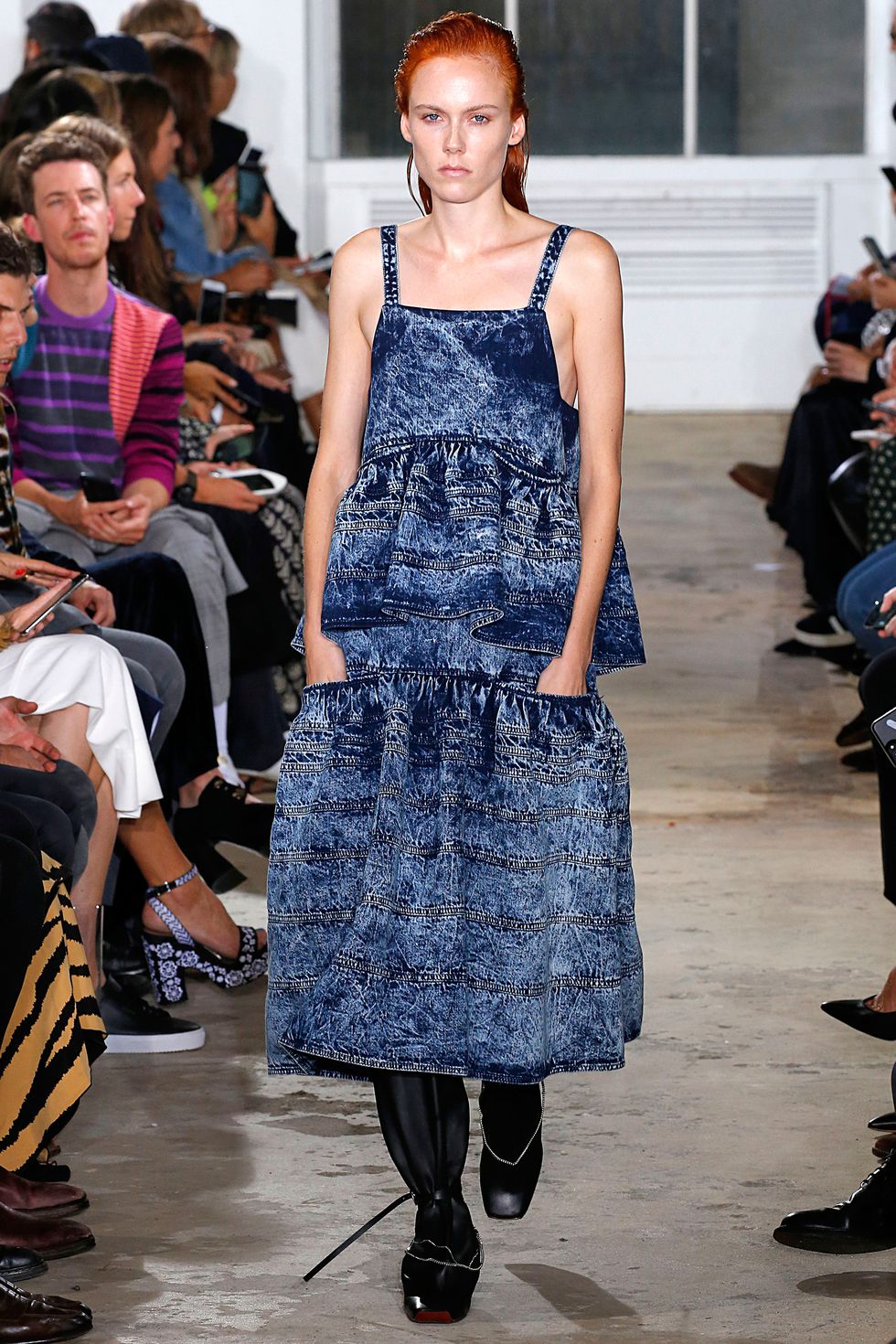
Proenza/SS19 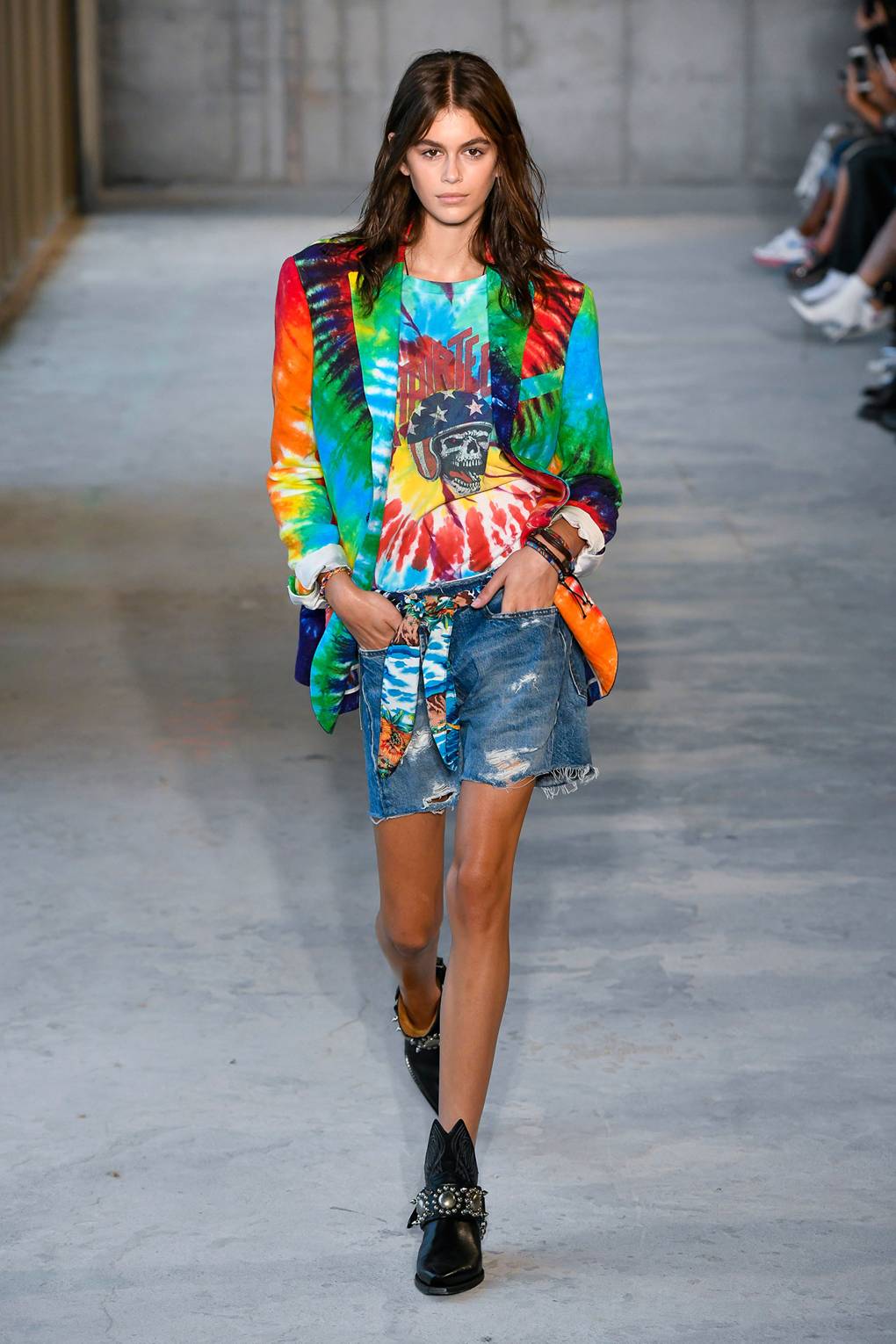
R13/SS19 
Stella McCartney/SS16 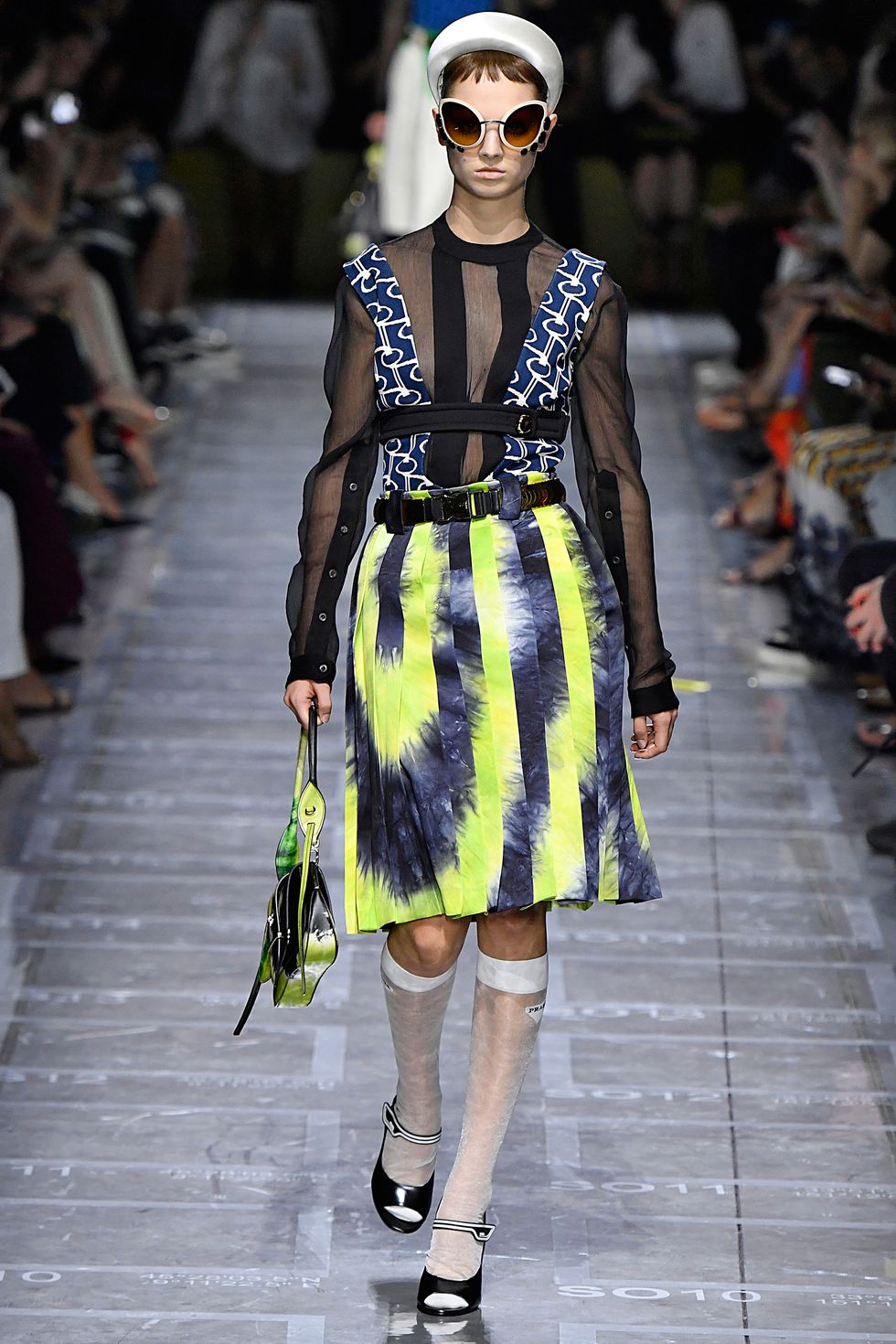
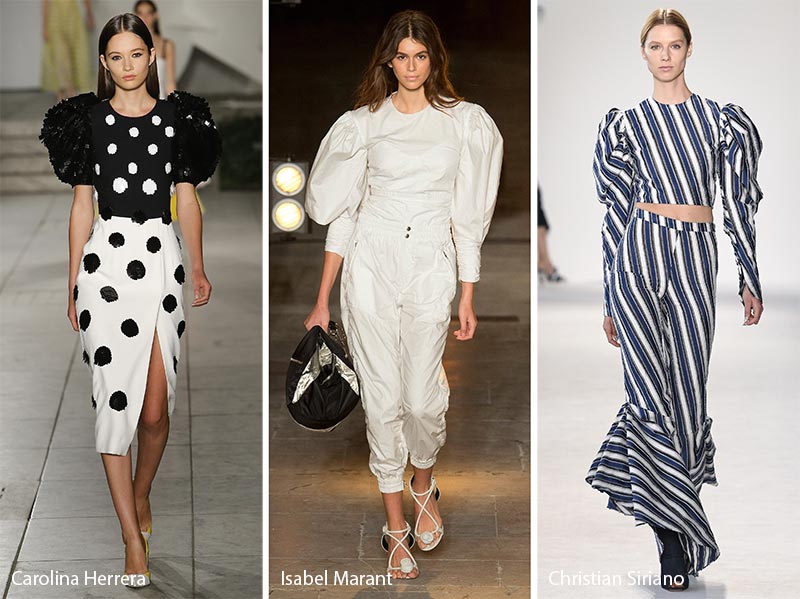
However, usually, a street trend that become swiftly popularised and widely accepted than can rapidly disappear. For example, the 80’s puffy sleeves trend that backs first on the SS18 runway only last unit A/W18 (Schimminger, 2018). This type of silhouette looks great on the runway, but can be tricky to translate to wardrobe or street-style. According to Rouso and Ostroff (2018), fashion fads usually have a prevalent feature or detail that makes it popular. The look can appear in the lower-priced market, also not limited to runways, traditionally stays for a short period of time.
Meanwhile, classic looks remain in fashion for a long time. A classic look usually described as a simple design that satisfies basic needs. A classic silhouette is timeless and can be mixed and matched with many themes. For example, Burberry Chelsea, Kensington and Westminster trench coats both for women and man are considered as a classic, that popularity is timeless. Unlikely fads, classics are low risk, with stable rates of sale season after season (Donnellan, 2014).

As a result, fashion classic is easy to predict what cannot be stated about the fads. Tracking the success of the specific style, colour or silhouette in the modern fashion era where growing autonomy of the consumers increasing is, therefore, become challenging. According to Brannon and Divita (2015) for consumers, the concepts of following trends and being a fashion victim are one at the same. The will to avoid both have driven consumers toward individualised selection of styles or looks, which are hard to forecast as they change depending on the various facts.
References:
Brannon, E.L. and Divita,L., 2015. One: Forecasting Frameworks [e-Book]. 4thed. New York: Fairchild Publications. Available via: Bloomsbury Fashion Central [Accessed on 13thMarch 2019].
Donnellan, J., 2014. Fashion Merchandising [e-Book]. 4thed. London: Bloomsbury Publishing. Available via: Bloomsbury Fashion Central [Accessed on 13thMarch 2019].
Kawamura, Y., 2012. Part 3: The Power Of The Youth: Trickle-Up/Bubble-Up Theory Revisited [e-Book]. USA: Berg Fashion Library. Available via: Bloomsbury Fashion Central [Accessed on 13thMarch 2019].
Lowe, E.D., 2010. Berg Encyclopedia of Worl Dress and Fashion: Class [e-Book]. USA: Berg Fashion Library. Available via: Bloomsbury Fashion Central [Accessed on 13thMarch 2019].
Rousso, C. and Ostroff, N.K., 2018. Fashion Forward: A Guide to fashion Forecasting [e-Book]. 2nd ed. London: Bloomsbury Publishing. Available via: NTU Library OneSearch [Accessed on 13thMarch 2019].
 FASHION